
If fine lines, sunspots, acne scars, or rough texture are making your skin look less even than you would like, laser skin resurfacing may offer a customizable way to address them. Still, you may wonder how to prepare, what the treatment feels like, and how much redness or peeling to expect before your skin begins looking refreshed.
At Plastic Surgery Center of Hampton Roads, our board-certified plastic surgeons and experienced aesthetic providers offer advanced skin treatments backed by more than 90 years of combined surgical experience. Because laser intensity and recovery vary by technology, treatment depth, and skin type, knowing what happens at every stage can help you plan confidently. Here is what to expect before, during, and after laser skin resurfacing.
Before laser skin resurfacing
Your treatment begins with a consultation. Your provider will examine your skin, discuss your goals, and review your history. Be prepared to disclose medications, supplements, previous cosmetic procedures, scarring tendencies, sun exposure, and any history of cold sores.
Laser skin resurfacing is not a single standardized treatment.
Ablative lasers remove portions of the skin’s surface, while non-ablative lasers heat deeper tissue without removing the outer layer. Fractional laser systems treat microscopic columns while leaving the surrounding tissue intact. At our practice, we use HALO®, which combines both ablative and non-ablative laser wavelengths for customizable resurfacing.
Your provider may ask you to:
- Avoid tanning and prolonged sun exposure
- Use broad-spectrum sunscreen consistently
- Pause certain exfoliants or active skincare products
- Stop smoking or using nicotine
- Adjust medications or supplements when medically appropriate
- Begin antiviral medication if you have a history of cold sores
- Arrange transportation if sedation will be used
Never stop a prescribed medication without instructions from the prescribing clinician.
During laser skin resurfacing
Your skin will be thoroughly cleansed before treatment. Depending on the laser settings and treatment depth, a topical numbing cream, local anesthetic, oral medication, or sedation may be used to support your comfort. Protective eyewear is required.
Your provider then passes the laser handpiece across the treatment area. The device delivers controlled energy at selected depths, targeting damaged cells and stimulating the skin’s natural repair response. You may feel warmth, prickling, or brief snapping sensations.
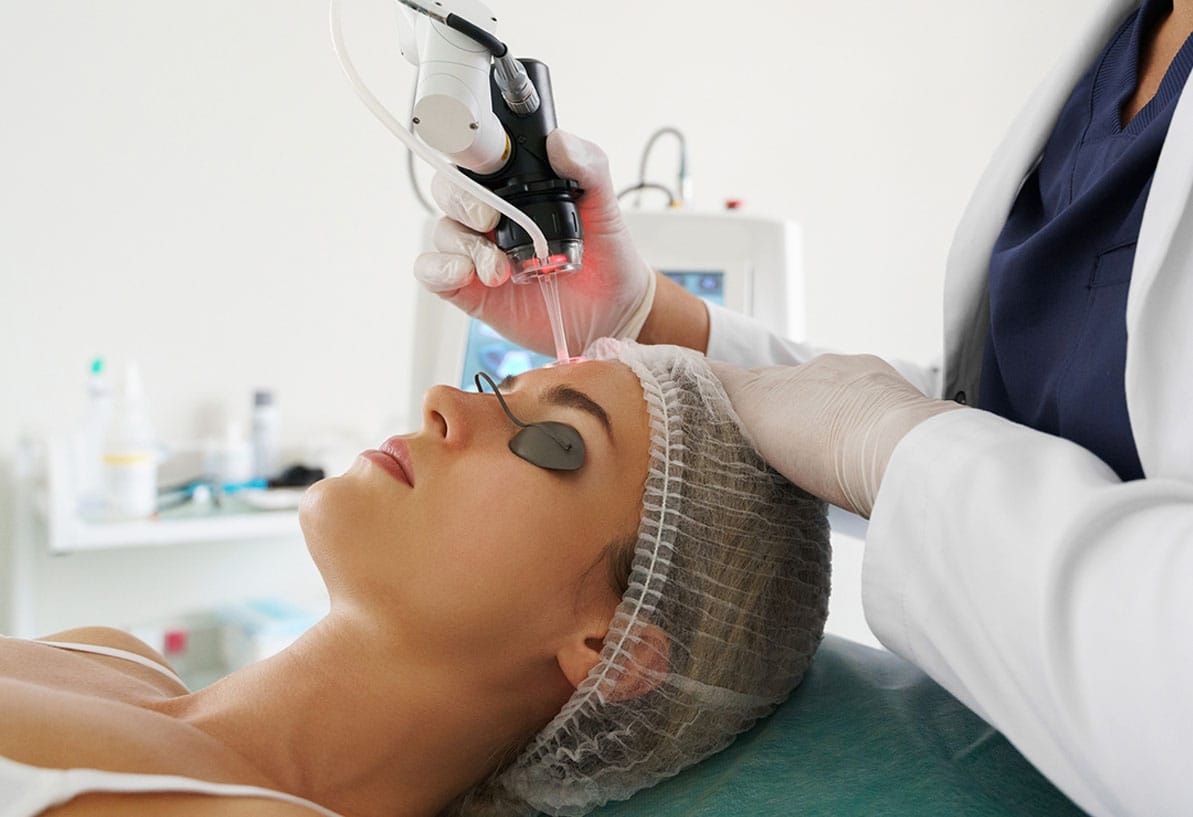
Treatment time varies with the size of the area and the intensity of laser resurfacing. A focused treatment may take less than an hour, while extensive resurfacing can take longer. HALO allows us to adjust the depth to your concerns and preferred level of downtime.
After laser skin resurfacing
Immediately after your treatment
Redness, warmth, swelling, and a sunburn-like sensation are common after resurfacing. More intensive treatment may also cause pinpoint bleeding, oozing, or crusting. Your provider may apply a soothing ointment, dressing, or cooling treatment before you leave.
Follow your aftercare instructions carefully. These may include:
- Cleansing the skin with an approved product
- Applying recommended ointments or moisturizers
- Avoiding picking, rubbing, and exfoliation
- Sleeping with your head elevated to reduce swelling
- Avoiding makeup until your provider approves it
- Staying away from heat, strenuous exercise, and swimming temporarily
Contact us if you develop worsening pain, spreading redness, pus-like drainage, fever, blisters, or another unexpected symptom.
The first week after resurfacing
Your skin may become darker, rougher, or bronzed before it flakes or peels. This can be an expected part of the renewal process. Do not remove peeling skin, as doing so may increase the risk of irritation, infection, or scarring.
Recovery varies significantly. A lighter fractional treatment may involve several days of redness and dryness, while deeper ablative resurfacing can require a longer period of wound care and social downtime. Your provider will explain the likely timeline before treatment.
The following weeks and months
Once the skin has healed, it may look smoother, brighter, and more even. Redness can persist longer after aggressive laser resurfacing, and then gradually fade as the skin recovers.
Collagen remodeling occurs slowly, so improvements in skin texture and firmness may continue developing for months. Some concerns respond to a single treatment, while others require a series of treatments. Results vary with depth, skin condition, lifestyle, and aftercare.
Sun protection is essential. Newly resurfaced skin is particularly vulnerable to discoloration, so use broad-spectrum sunscreen and minimize direct exposure as directed.
Plan your laser skin resurfacing treatment
At Plastic Surgery Center of Hampton Roads, we customize laser skin resurfacing according to your skin type, concerns, and recovery preferences. Our team offers HALO and other advanced technologies at our Newport News and Williamsburg locations. Schedule a consultation with our providers to learn which laser skin resurfacing approach may help you achieve smoother skin.