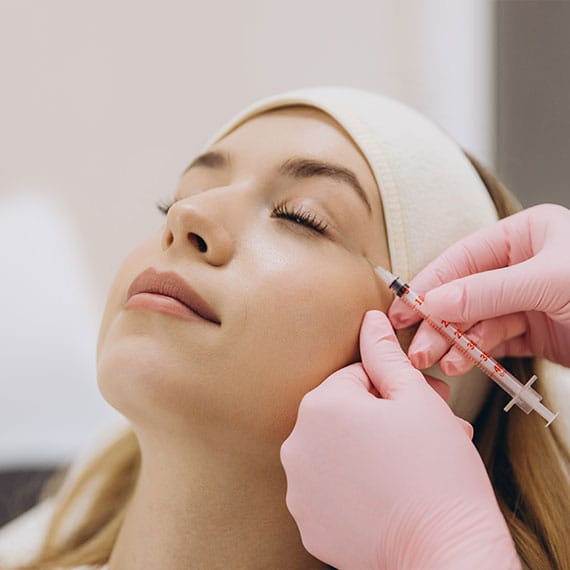
You’ve likely heard of BOTOX as the gold standard for smoothing away dynamic wrinkles: an injectable that can effortlessly turn back the clock on your expression lines. But what happens when it suddenly doesn’t seem to work as well as it used to?
You have waited the usual two weeks, but your forehead still moves freely, or those stubborn crow’s feet or frown lines refuse to relax. Before assuming you’ve become “immune” to BOTOX, it’s important to understand what’s really happening beneath the surface.
At the Plastic Surgery Center of Hampton Roads, we often see patients concerned that their BOTOX has “stopped working.” In reality, true BOTOX resistance is rare. Most of the time, there are other perfectly normal explanations, and many practical ways to restore your results. Let’s explore what BOTOX resistance means and how to help prevent it.
What is Botox resistance?
BOTOX resistance occurs when your body stops responding to the neurotoxin (botulinum toxin type A) used in treatments like BOTOX® Cosmetic. This can happen for one of two reasons:
- Your immune system produces neutralizing antibodies that block the active ingredient from binding to nerve endings, thus preventing muscle relaxation.
- Your body metabolizes the toxin unusually fast, shortening its effectiveness.
However, this condition is extremely rare. Clinical studies have shown that fewer than 1.5% of patients develop antibodies that neutralize BOTOX, and most providers estimate true resistance occurs in only 1 in 10,000 patients. In other words, while it’s possible, it’s highly unlikely that your lack of results is caused by genuine resistance.
In most cases, there may be other explanations
When BOTOX doesn’t seem to deliver the same results, it’s often due to factors unrelated to immunity or metabolism. Here are some of the most common explanations.
You haven’t waited long enough for results
BOTOX works by gradually relaxing overactive facial muscles. Although you may notice smoother skin within 48 to 72 hours, it can take up to 10 to 14 days for full results to appear. If it’s only been a few days, give it a little more time. Your final outcome may still be developing.
You switched to a new provider who is still fine-tuning your dosage
Every injector has a unique technique and dosing strategy. When you see a new provider, they’ll likely start conservatively to avoid over-treating to avoid the dreaded “frozen” look. This cautious approach ensures natural results, but it may take a session or two to perfect your dosage. If results seem too subtle, contact your provider for a follow-up to enhance your outcome.
You’re experiencing natural age-related changes
Even if you’ve been getting BOTOX for years, your skin continues to age. Over time, collagen and elastin levels decline, and fat pads beneath the skin shift or thin out. These changes can make wrinkles appear deeper, giving the impression that BOTOX has “stopped working.” In such cases, you may need fillers to restore volume and complement your neuromodulators.
You received injections in the wrong location or at the wrong depth
The precision of injection placement makes all the difference in achieving ideal results. If BOTOX is injected too superficially, too deeply, or in the wrong muscle, it may not properly relax the target area. This can lead to uneven or underwhelming results. That’s why it’s crucial to choose a board-certified provider with an expert understanding of facial anatomy.
You might respond better to another brand
Not all neuromodulators are identical. Although BOTOX, Dysport®, Xeomin®, Jeuveau®, and Daxxify® share the same active ingredient, their formulations differ slightly in protein structure and diffusion properties. Some patients naturally respond better to one brand over another. If BOTOX isn’t providing the results you want, try another neuromodulator.
You were treated with a diluted or counterfeit product
Unfortunately, counterfeit or overly diluted products exist, especially at non-medical spas offering discounts. Authentic BOTOX can only be purchased by licensed medical professionals directly from Allergan. Always verify that your injections are administered in a legitimate medical facility under the supervision of a qualified physician to ensure safety.
Signs that you’re truly dealing with Botox resistance
BOTOX resistance is uncommon, but it can occur. You might be dealing with it if you experience:
- Minimal or no muscle relaxation after multiple sessions
- Consistently short-lived results despite proper dosing
- No improvement, even when switching providers or injection sites
- Confirmed antibody testing showing resistance
If these signs apply to you, discuss them with your provider. There are often alternative neuromodulators or treatment approaches that can help you regain results.
Tips to prevent Botox resistance
Even though true resistance is rare, a few smart habits can reduce your risk and help you maintain long-lasting results from your treatments.
Space out your treatments appropriately
Getting injections too frequently can, in theory, increase the chance of your body forming antibodies. Most experts recommend waiting at least 12 to 16 weeks between sessions. Allowing your muscles time to “rest” helps prevent overstimulation of your immune system.
Work with a qualified, consistent provider
Stick with a trusted, experienced injector who understands your anatomy and treatment history. Consistency allows your provider to monitor subtle changes in muscle response and adjust dosage safely over time, reducing the need for frequent corrections.
Avoid “bargain” injections or unverified sources
Tempting low-cost offers can come at a high price if the product is fake, expired, or improperly diluted. Only choose reputable medical practices, like Plastic Surgery Center of Hampton Roads, that source genuine BOTOX directly from Allergan.
Maintain healthy skin and lifestyle habits
Aging, dehydration, smoking, and excessive sun exposure can all accelerate wrinkle formation, diminishing your results. Supporting your skin with medical-grade skincare, hydration, and sun protection helps maximize the longevity and effectiveness of your neuromodulators.
If your BOTOX isn’t working the way it once did, it’s rarely a case of true resistance. In most situations, small adjustments to your treatment plan, provider technique, or complementary treatments can restore your desired look.
At Plastic Surgery Center of Hampton Roads, our injectors take a medically guided approach to help you achieve smooth, natural, and lasting results. Schedule a consultation to discuss your goals and discover the most effective plan to keep your expression lines at bay.